
How Long Will It Take to Pay Off My Debt? A Simple Timeline Guide | My Debt Navigator
If you have debt right now, you probably want the same thing everyone wants: a real finish line. Not “someday,” not “when life calms down,” but an actual timeline you can trust.
The hard part is that debt payoff time is usually slower than people expect, mainly because interest is doing push-ups in the background. This guide is general education, not personal financial advice, but it will help you estimate your timeline in a way that feels clear and realistic.
Why debt payoff timelines feel longer in 2025 and 2026
Debt is a normal American problem right now, so if you feel behind, you are not “bad with money.” Total household debt reached about $18.59 trillion in Q3 2025, and credit card balances were about $1.23 trillion. That matters because it tells us this is not just a you-issue, it is a high-cost environment that makes payoff timelines stretch. (Source: New York Fed)
When interest rates are high, the same payment you used to make can suddenly do less work. You can be paying faithfully and still feel like the balance is barely moving, especially on credit cards. Once you understand what actually controls the timeline, you can stop guessing and start steering.
The three numbers that decide your payoff date
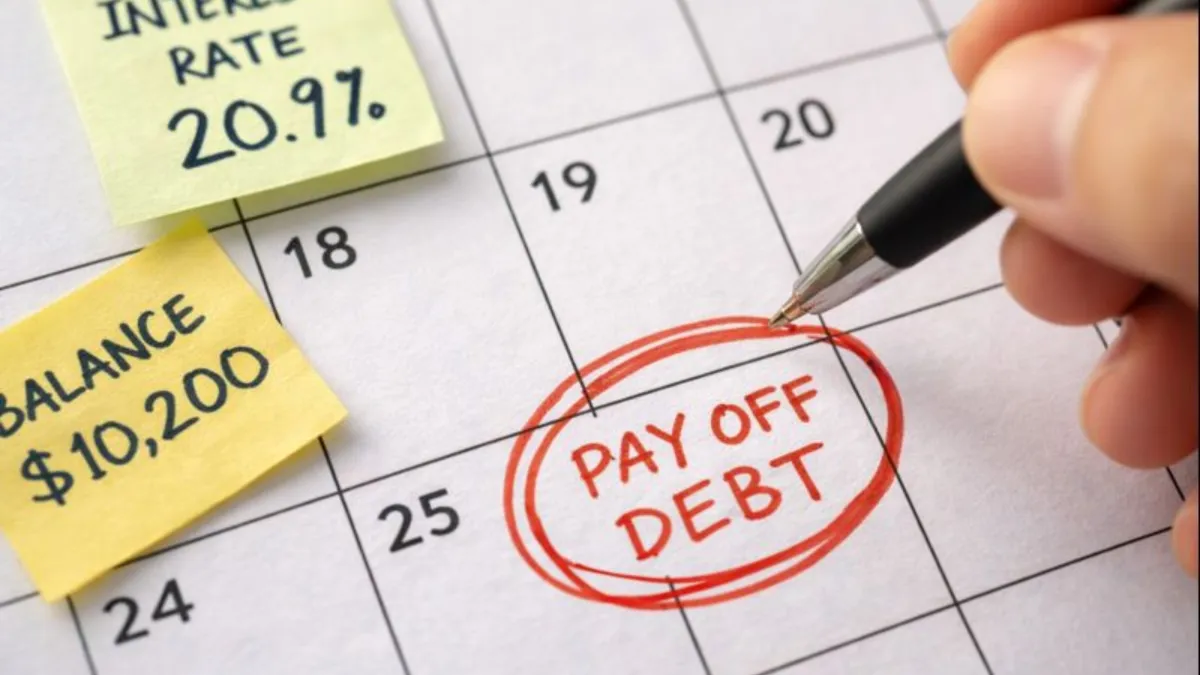
Your payoff date is basically controlled by three numbers: your balance, your interest rate, and your monthly payment. Your balance is the weight you are moving. Your monthly payment is the force you are applying. Your interest rate decides how much of your force gets “taxed” before it hits the balance.
To keep it grounded in today’s reality, the commercial bank interest rate on credit card plans across all accounts was about 20.97% in November 2025. At rates like that, interest can take a big bite out of every payment unless you are paying well above the minimum. (Source: Board of Governors of the Federal Reserve System)
Here’s the simple mental model: if your payment barely covers interest, you are treading water. If your payment covers interest and leaves a meaningful amount to reduce the principal, your timeline gets shorter fast. That is why two people with the same balance can have completely different payoff dates.
Why minimum payments keep people stuck
Minimum payments are designed to keep the account current, not to help you get out quickly. In the CFPB’s most recent credit card market report, the Bureau explains that minimum payment formulas commonly use a percentage of the balance, and issuers often add interest and fees on top. The report also notes that issuers set dollar “floors” for minimum payments, commonly around $40, and that many issuers set the percentage around 1% of the balance. (Source: Consumer Financial Protection Bureau)
The same report shows how common it is to pay only the minimum: about 15% of general-purpose accounts and about 20% of private label accounts pay only the minimum each month, and roughly one-third of cardholders with subprime or near-prime credit scores do so. (Source: Consumer Financial Protection Bureau)
This is where timelines get sneaky. When you pay the minimum, your payment can shrink as your balance shrinks, which slows the payoff in the later months. You feel progress, but the finish line keeps walking away. If you want a faster timeline, the goal is to break out of “minimum payment mode” as soon as possible.
What speeds it up the most, without relying on wishful thinking
The fastest timeline improvements usually come from two moves: increasing how much of your payment hits principal, and reducing the interest rate you are paying. That is it. Everything else is a supporting character.
Why interest rate changes matter so much right now is simple: the cost of carrying credit card debt has stayed elevated. For example, the Philadelphia Fed’s large bank data showed the average purchase APR for general-purpose cards at 24.5% in Q3 2025, which is extremely high for anyone carrying a balance month to month. (Source: Federal Reserve Bank of Philadelphia)
So the practical path looks like this: lock down spending so the balance stops growing, then push payments above the minimum so the principal actually drops, then explore ways to lower the rate if you qualify. If you do those in that order, your payoff date usually moves up in a way you can feel within one or two billing cycles.
A timeline you can feel good about
You do not need a perfect plan. You need a plan that you can repeat every month, even when life is annoying. If you want, take your current balances, rates, and payments and run a simple payoff estimate. Then decide on one realistic upgrade you can hold, like a fixed monthly payment that stays the same even as the balance drops.
If you want help turning your numbers into a clear payoff timeline and exploring realistic options, check out My Debt Navigator. You will get clarity on what applies to your situation and what a faster, more stable path can look likeIf you want a payoff timeline you can actually trust, the next step is getting your numbers organized and matching them to the right strategy.
For more practical debt guides like this, explore the Blog Hub and keep building your plan with simple, step-by-step education.
Book a free consultation call with My Debt Navigator.