
How Minimum Credit Card Payments Trap You in Debt for Decades | My Debt Navigator
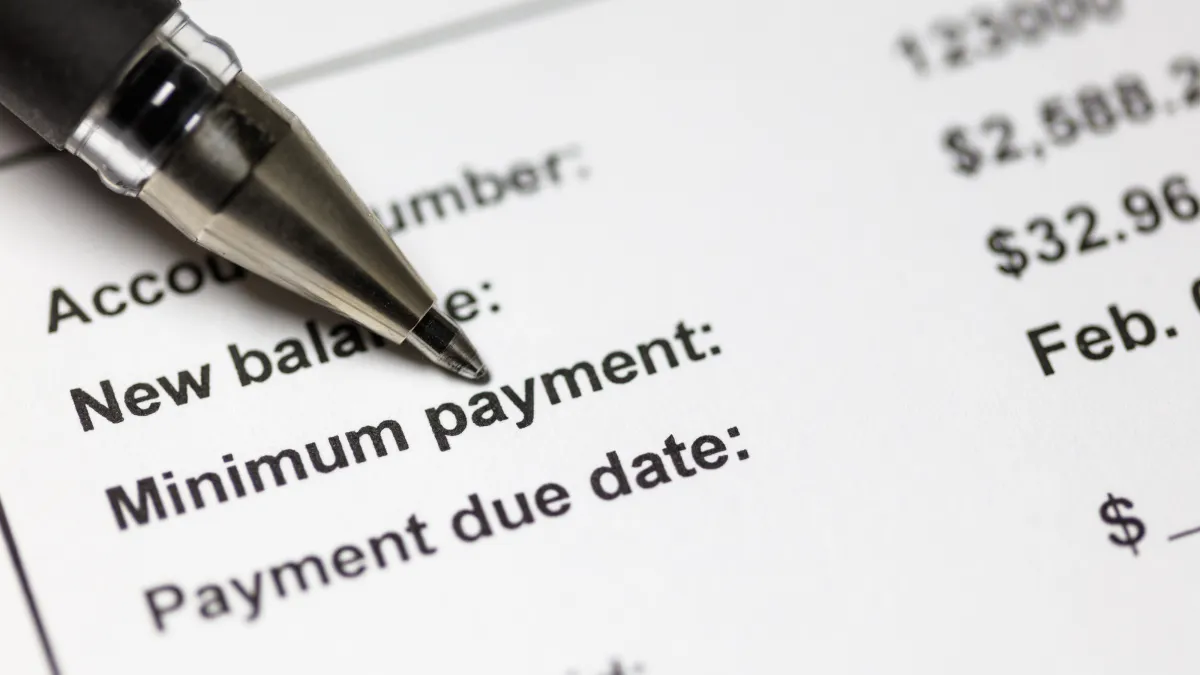
Minimum credit card payments feel like a relief when money is tight. The statement shows a balance that looks intimidating, followed by a minimum due that seems manageable. Paying that amount keeps the account current and avoids late fees, so it feels like the responsible move.
The problem is that minimum payments are not designed to get you out of debt. They are designed to keep you paying interest for as long as possible. In today’s high-rate environment, paying only the minimum can quietly turn a few thousand dollars into decades of repayment and tens of thousands in total cost.
How minimum credit card payments are calculated
When a credit card statement is generated, the minimum payment is usually calculated as a small percentage of the balance, often around 1% to 3%, or as the interest charged for the month plus a small portion of principal. Fees and past-due amounts may also be included. As long as you pay that minimum by the due date, the account stays in good standing and the remaining balance rolls forward. (Source: Capital One)
Because the minimum is tied to the balance, it often decreases over time. That feels like progress, but it usually means less money is being applied to the actual debt. Most of the payment goes toward interest, especially when rates are high. The balance declines slowly, even if you stop using the card completely.
Why today’s interest rates make minimums especially dangerous
Credit card interest rates remain elevated in 2025. The average APR on accounts that carry a balance is about 22.8%, according to national consumer lending data (Source: Federal Reserve Bank of St. Louis). At that rate, interest accrues at close to 2% per month.
When your minimum payment is roughly the same size as the monthly interest charge, very little goes toward reducing the balance. That is why balances can linger for years. Even consistent, on-time payments may barely move the needle because interest consumes most of what you send in.
This environment matters because Americans are carrying more credit card debt than ever. With rates this high, time becomes expensive. The longer a balance remains open, the more interest compounds, and the harder it becomes to escape using minimum payments alone.
What minimum payment warnings reveal about payoff timelines
Federal law requires credit card statements to include a minimum payment warning that estimates how long it will take to pay off the balance if only minimum payments are made. In real examples reviewed by consumer finance analysts, balances under 3,000 dollars were projected to take more than a decade to repay using only the minimum, with total interest costs exceeding the original balance (Source: NerdWallet).
These warnings assume no new charges and no missed payments. In real life, many people continue using the card for everyday expenses, which stretches the timeline even further. What starts as a short-term solution becomes a long-term financial drain, often without the cardholder fully realizing how much interest is accumulating.
How to start breaking the minimum payment cycle
The first step is to stop treating the minimum payment as the goal. It is the lowest amount allowed, not a payoff strategy. Choose a fixed payment that is higher than the minimum and realistic for your budget, then keep paying that amount even as the minimum drops. That single change increases how much goes to principal each month and shortens the payoff timeline significantly.
It also helps to avoid adding new charges to cards you are trying to pay down. When spending continues, payments are chasing a moving balance. Shifting daily expenses to cash or debit while focusing on payoff gives your payments a chance to make real progress.
If your balances are too large or your income cannot support higher payments, it may be time for structured help. A personalized review can clarify whether options like consolidation or negotiated repayment make sense for your situation. My Debt Navigator provides confidential consultations to help people understand the true cost of their minimum payments and build a plan to get out of debt faster. Replacing decades of interest with a clear strategy can change both your finances and your peace of mind.
Book a free consultation call with My Debt Navigator today.
For more stories and insights, visit My Debt Navigator Blog Hub.