
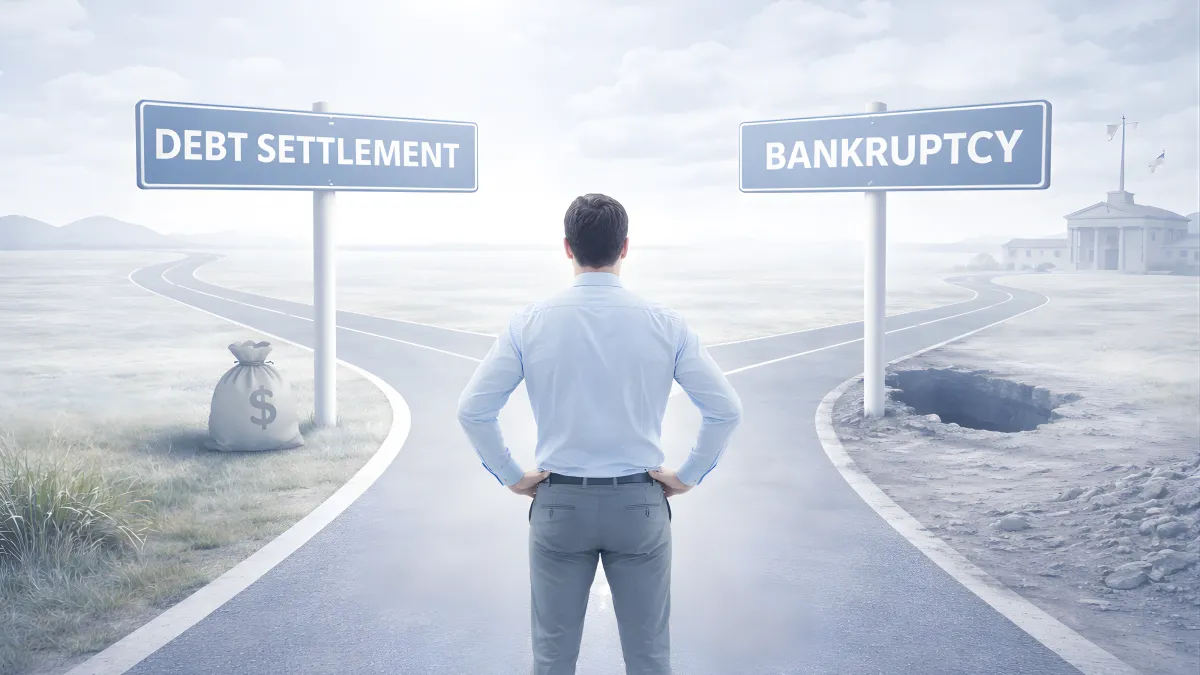
Debt Settlement vs. Bankruptcy: Pros, Cons, and Long-Term Consequences | My Debt Navigator
Debt stress can change how people live day to day. It can affect sleep, relationships, work, and the ability to plan anything beyond the next bill. When someone is buried in balances they cannot realistically keep up with, the question usually becomes very simple: what is the smartest way out that causes the least long-term damage?
That question matters for a lot of Americans right now. According to the Federal Reserve Bank of New York, total U.S. household debt reached $18.8 trillion in the fourth quarter of 2025, and credit card balances rose to $1.28 trillion. Those numbers help explain why more people are comparing serious debt relief options instead of trying to hang on with minimum payments alone. (Source: Federal Reserve Bank of New York)
How debt settlement works, and why it can backfire
Debt settlement usually means trying to resolve unsecured debt, such as credit card debt, for less than the full amount owed. That can sound attractive because the idea is simple: settle the account for less, reduce the total burden, and move on faster than you could by paying in full. For some people, that may be possible.
The risk is in how the process often works in real life. The Consumer Financial Protection Bureau warns that many debt settlement programs tell consumers to stop paying their creditors while money builds up for possible settlements. That can trigger late fees, added interest, credit score damage, and even lawsuits. It also is not guaranteed that every creditor will agree to settle. In other words, debt settlement can help in some cases, but it can also leave someone deeper in the hole if they enter the wrong program or start too late. That is why My Debt Navigator should frame settlement as a serious option that needs a clear-eyed review, not as an easy shortcut. (Source: Consumer Financial Protection Bureau)
When bankruptcy may offer broader relief
Once debt becomes too large to settle realistically, bankruptcy may offer more complete legal protection. Chapter 7 is generally the faster form people think of first. The U.S. Courts explains that it is a liquidation process in which a trustee may sell nonexempt property to pay creditors, while many unsecured debts may be discharged. Chapter 13 is different. It allows individuals with regular income to repay all or part of their debts through a court-approved plan over three to five years.
That distinction matters because the better option depends on what the person is trying to protect. Someone with little disposable income and mostly unsecured debt may look at Chapter 7 very differently from someone who is behind on a mortgage or car and needs a structured repayment plan. Bankruptcy is not light stuff, but it can be the more realistic path when the debt is simply no longer manageable. That reality is showing up more often: U.S. bankruptcy filings for the year ending December 31, 2025 rose 11 percent from the prior year. (Source: U.S. Courts)
The long-term credit consequences are different, but both matter
A lot of readers want to know which option hurts credit more. The honest answer is that both can cause damage, just in different ways. Debt settlement often involves missed payments, charge-offs, and collection activity before any account is resolved. Bankruptcy creates a formal public filing and stays in credit reporting systems for years.
According to the CFPB, a Chapter 13 bankruptcy generally stays on a credit report for 7 years, while a Chapter 7 bankruptcy generally stays for 10 years. The CFPB also notes that most other negative information usually remains for seven years. That does not mean recovery is impossible. People can rebuild. But it does mean this choice should be made based on the full timeline, not just short-term relief. For readers comparing options, My Debt Navigator can add real value by helping them think beyond the monthly payment and focus on what recovery could look like one, three, and five years from now. (Source: Consumer Financial Protection Bureau)
One consequence people often miss
There is another issue that deserves more attention in debt settlement conversations: taxes. The IRS says that, in general, canceled or forgiven debt may be taxable income unless an exception applies. That means if a creditor forgives part of a balance in a settlement, the borrower may face a tax consequence later. Bankruptcy is treated differently. Debt discharged in bankruptcy is generally excluded from taxable income under IRS rules. (Source: Internal Revenue Service)
That does not automatically make bankruptcy the better answer. It just means debt settlement can create a second problem if someone only looks at the reduced balance and ignores the after-effects. That is why the smartest next step is not guessing. It is reviewing the full picture, including debt type, income, assets, collection pressure, and possible tax exposure. If readers want to keep learning, they can explore the My Debt Navigator Blog Hub or read Do You Qualify for Debt Relief? What Programs Look For. And if they are ready to talk through their situation, they can book a consultation with My Debt Navigator.
Book a free consultation call with My Debt Navigator.